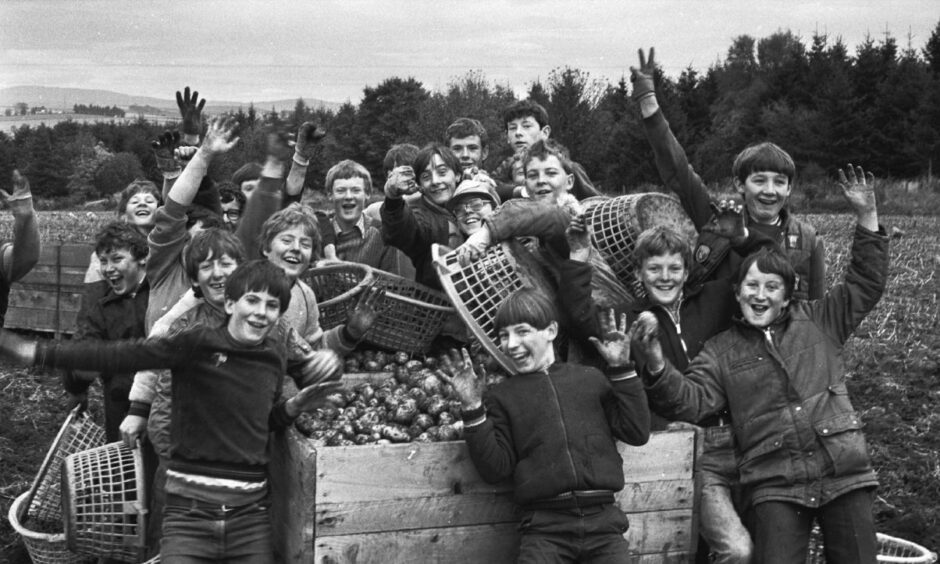
In Scotland, the country harvests their potatoes — colloquially known as “tatties” — around mid-October. Farming families, looking for more labourers to help them, would often bring their children out of school during the season to help with the harvest.
Eventually, schools became so empty during this period that the schools themselves, who generally received funds based on attendance, were suffering, and complaining to the then Scotch Education Department. Around the 1870s, the Department decided to make the entire period a school holiday, which was quite an effective way of avoiding having to deal with the problem. 🤣
So the “Tatties holidays” were established. They weren’t standardised, and were granted or refused by individual schools and boards. Most chose a two-week holiday, but one- and three-week weren’t uncommon.
This holiday still wasn’t officially recognised though, and, although during the first and second world wars they were almost universally granted to help with the war effort at home, attempts to revoke them following the second world war met with protests. The problem still remained though, that the tatties holidays dropped two weeks from the average student’s attendance. The solution? Take two weeks off the end of the summer holiday.
The actual harvest itself has long since been automated and made more efficient, and human harvesters can’t keep up with machines any more. The tradition renains however, and some studies even show that student wellbeing benefits from shorter, more frequent breaks, rather than simply one large one in summer.
My sources for this post are the official Scotland holiday dates, and Heather Holmes on the Scottish agricultural implement makers site.