
Most science fiction takes one of two stances: a positive one of exploration and discovery (à la Star Trek), or a dystopia where humanity is being brutally oppressed or even is the one doing the oppressing.
Adrian Tchaikovsky takes a slightly different path from either, but does tend to lean towards the negative. His books contain a brilliant impression of interstellar travel by humanity into the far future, with a refreshing sense of pessimism. 😂
To begin, Shards of Earth takes place outside the previously established universe of some of his previous books. Even more confusingly, it starts with the destruction of Earth. An alien race called the Architects have waged war on humanity, with their particular method of warfare being to reshape human planets into huge spiralling shapes, ripping structures apart and altering their structure into something humanity can only describe as artistic.
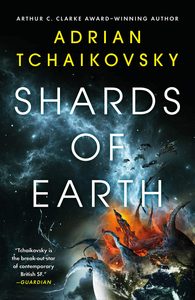
Of the many human factions in the galaxy, only the Council of Human Interests (Hugh) has a weapon that can defeat the architects. Intermediaries: humans who have been experimented on, and can seemingly “talk” to Architects. So one particular Inteemediary — Idris Tellehmier — managed to convince an Architect to stop, and none have been seen since.
Shards of Earth follows the story of Idris many years later, when he is a spacer with a salvage crew, trying desperately to avoid the spotlight again. But both him and us discover throughout, that maybe the Architects aren’t quite as gone as was thought…
This book was amazingly written, paced at just the right tempo to keep you on the edge of your seat without feeling rushed. Those who read my review on Earthsea will remember that I don’t enjoy being rushed through a book. Tchaikovsky thankfully doesn’t give me these issues.
The book also follows a system of dual-narrators, which is an interesting style that I can’t say I’ve come across much in my reading, but which I certainly enjoy. But this does lead to the one downside in my opinion, which is that the other characters fade into the background a bit, having been set up so elaborately and with promise.
Tchaikovsky’s books always make me question my own impression of the future. I’m a Star Trek fan, naturally, so my view of the future tends to be a bit more optimistic: exploration, cooperation, and universal equality. Tchaikovsky’s works are similar in the scale of humanity’s advances, but vastly different in its outlook on how we continue, focussing much more on collapse and demise. It’s a refreshing testament to pessimism. 😂
Overall, I would absolutely recommend this to anyone who likes science fiction, and would place Tchaikonsky as amongst some of the best science fiction authors of the modern era. Perfect, no notes.