
So for the avoidance of doubt, and for anyone who might not know, Proton AG is a Swiss tech company trying to create an internet where privacy is the default option, directly opposing big tech giants like Google or Apple. They are my go-to for Mail and Password/Auth security, as well as more general advice on the current state of the internet.
I could say many things about Proton’s feature-list, some of them excellent, some less so. But one thing stands out in my everyday usage of Proton, and it relates to the calendar.
Proton Calendar: not their best work, in my opinion
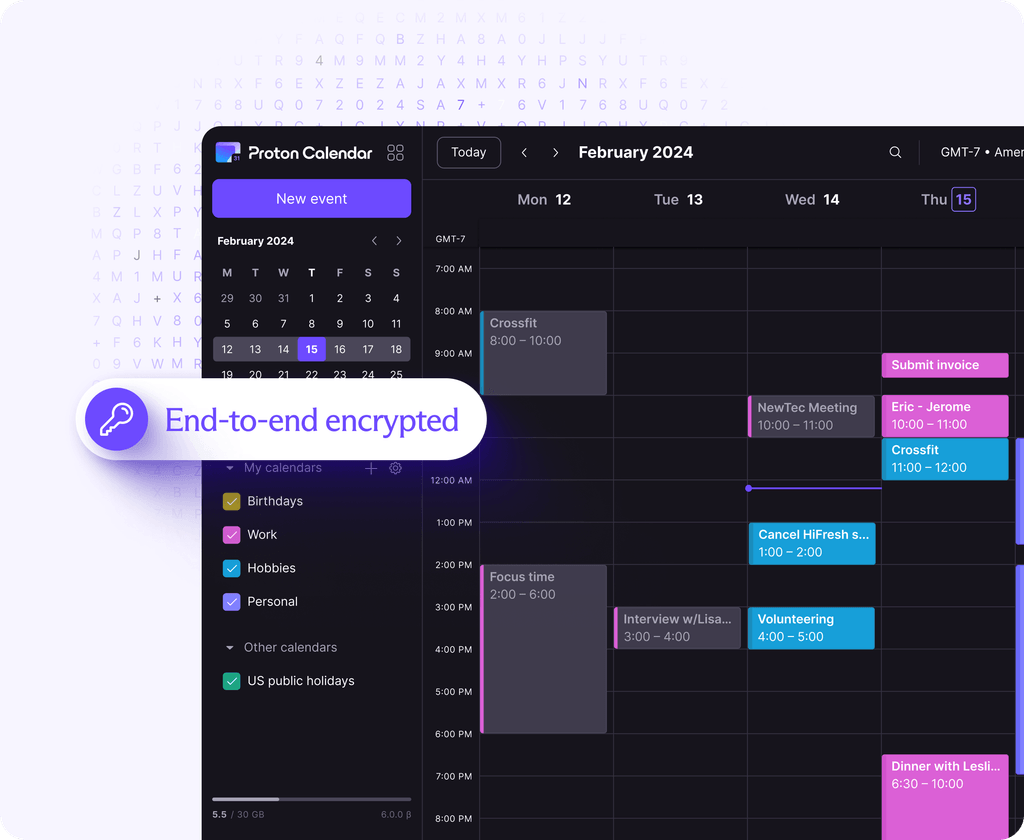
A calendar is just a series of events. And an event is just a notice that someone wants your attention at a certain time of the day. So for calendar apps to stick out, they need to do some more unusual things to the way they store and display events. Google Calendar, for example, is amongst the most used calendars in the world. And they get this usage by providing deep integration with the rest of their services, which are equally universally used. A GCalendar invitation can schedule a Google Meet event, send you a reminder to GMail, have a GDrive file uploaded and shared, and much more. Nothing’s changed with the events, but the extra baggage makes it useful.
Proton Calendar positions itself as the private alternative. There’s nothing wrong with that, and it does appeal to a particular userbase — myself included. But this means they can only replicate the features of others, which relies on the ecosystem as a whole. From my Proton calendar, I can arrange a Proton Meet and invite people via email. But I can’t add a location and have it find that place online, like GCalendar does. What I’m getting at in a weirdly roundabout way is that Proton Calendar doesn’t have a feature that sets it apart, beyond a company-wide commitment to privacy.
Then, we get into the features Proton actively blocks in order to fund itself. I’m talking about more than two calendars for events, changing the colour of the event, and sharing entire calendars. I know that Proton can’t offer these features for free because, unlike Google, their income is direct payments. In fact, I quite like that, because it proves that they are better than the data-harvesting corporations who currently run the internet. It does get a bit annoying though, when I make new events and am limited by my plan…
one single feature that I find an amazing example of Proton actually understanding their users.
Calendar’s also pretty standalone, particularly compared to GCalendar, which had contacts, notes, all kinds of integrations with other products. Calendar is calendar — fine if you need it, a bit restrictive if you’re used to Google.
So Proton Calendar is definitely a good personal option if your life doesn’t revolve around having a perfectly organised calendar. For a business, or someone with a lot of events that need easy sorting, other options exist.
So why do I still use Proton Calendar day-to-day? It’s
Proton’s the name; Imports is the game
The rest of my family isn’t as obsessed with privacy as I am (I’m sure others can relate 😂), so they still use Google Calendar. When originally switching to Proton, I was worried that I’d lose out on the ability to invite people using other email providers to the same event.
It seems though, that invites from a Google calendar will automatically be detected in my Mail inbox, and a Proton Calendar event will be created automatically. That feature is genuinely invaluable to me, and it’s what keeps me using Proton calendar, despite those above issues.
Now, I understand that this feature is not exclusive to Proton. Tutamail, for example, has a similar process. This function is tied to an email having a .ics file attached containing event information, which a client can detect. But the ability for Proton to have thought about that and built it into their calendar is an amazing example of product and user understanding on their part. This and its interaction with Mail to automatically add the event as it appears in the inbox, is the one feature keeping me using PCalendar.
In fact, I feel that could be their best answer to “what does Proton do that Google doesn’t.” Because on sheer quantity of computing power or developer team size, Google is undoubtedly the hegemony here, with over 180,000 employees at the end of 2024; Proton themselves advertise having 600 employees worldwide.
But Proton also highlights how easy it is to switch from Google, without losing any core functionality. It’s baked into their Easy Switch feature in Mail, allowing you to receive emails from your Gmail account within the Mail app. This kind of interoperability between Google features and Proton would appeal exactly to Proton’s largest userbase: people who want to deGoogle their life but who have friends and family and colleagues not necessarily as vehement about it. This gives people like me a way to not ditch the internet by moving away from Google.
So in my opinion, this kind of feature is one Proton should work more on. We already have Mail imports, Calendar events, but maybe Meet conversions where a Google Meet invite opens in Proton Meet but still allows you to connect to others invited; Drive conversions allowing you to import and manage files in your GDrive from Proton. Those might not necessarily be the most pressing or even feasible given Google’s proprietary nature, but they are examples of a wider trend.
In the modern internet, you no longer survive on having completely different features, because with millions of apps and billions of websites, someone else will have done it before. But what you can control, is your mission statement, your respect for your users, your desire to make the internet a better place, which manifests itself through making the process for conversion even more frictionless. Google doesn’t do any of those things; Proton does.
And that, ladies and gentlemen, is why I still use Proton Calendar. 📅
— James Michael